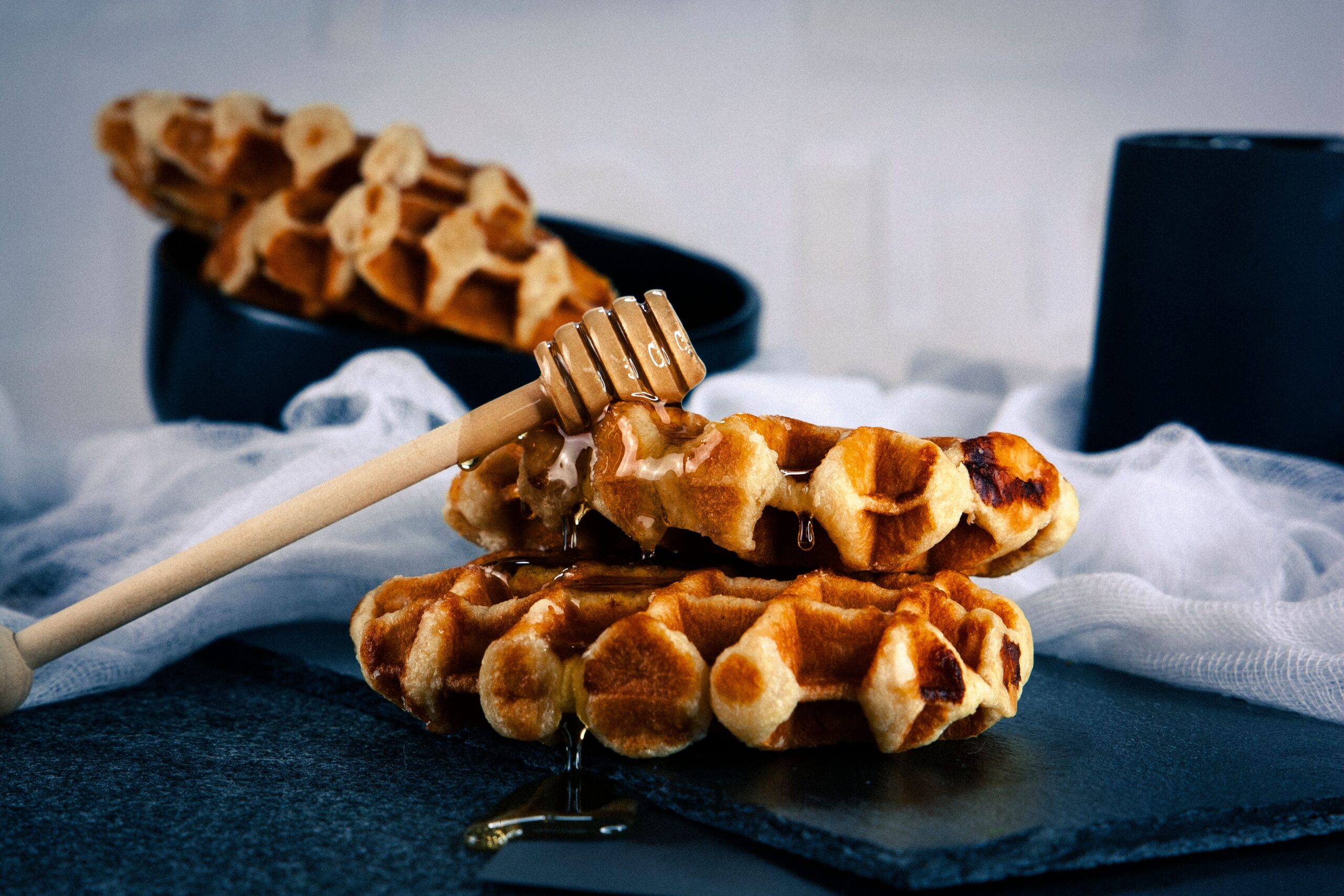
The true test of an authentic Belgian waffle isn’t its depth or the square grid pattern—it is that definitive, audible crackle when your fork pierces the crust, giving way to an interior as light and steamy as a cloud. Too many homemade waffles emerge from the iron dense, rubbery, or soft as a washcloth. Achieving a shatteringly crisp exterior that stays crunchy beneath a cascade of warm maple syrup is a matter of starch chemistry, thermal steam release, and whipped egg white physics.
The Physics of Crunch: Why Standard Batter Sogs
Most basic waffle recipes are simply slightly thickened pancake batters poured into an iron. This is fundamentally flawed. Pancakes depend on high moisture and gluten relaxation to puff outward smoothly. If you trap that same high-moisture batter inside a closed, scorching iron, the escaping steam condenses right back into the crust as soon as you open the lid, causing instantaneous sogginess.
To produce an exterior that shatters like pastry glass, you must alter the flour matrix. Replacing a portion of wheat flour with cornstarch lowers gluten concentration and absorbs escaping moisture. Furthermore, whipping egg whites to stiff peaks physically traps millions of micro-bubbles into the batter, ensuring rapid heat convection through the core while the outer starch crisps.
Essential Ingredients for Supreme Loft and Crispness
Each ingredient in this formula is specifically selected to balance structural crispiness with rich interior moisture:
- All-Purpose Flour (1 3/4 cups / 220g): Gives the waffle its foundational scaffolding.
- Cornstarch (1/3 cup / 40g): The secret weapon. Pure starch doesn’t form gluten, preventing chewiness and creating a thin, glass-like crunch on the surface ridges.
- Baking Powder (1 tablespoon): Delivers an explosive initial chemical rise upon hitting the hot iron plates.
- Baking Soda (1/2 teaspoon): Balances browning reactions and interacts with acidity for delicate pocket expansion.
- Granulated Sugar (2 tablespoons): Promotes caramelization on the waffle grid without making the batter cloyingly sweet.
- Large Eggs (2 units, separated): Yolks provide fat and emulsifiers; whites are whipped separately into a stiff meringue to inject airy structure.
- Whole Milk or Buttermilk (1 3/4 cups / 420ml): Whole fat content prevents the interior crumb from drying out.
- Melted Unsalted Butter or Neutral Oil (6 tablespoons / 85g): Fat is crucial for thermal conduction in an iron; oil creates a slightly crisper exterior, while butter provides unrivaled rich aroma. A 50/50 blend yields the best of both worlds.
- Pure Vanilla Extract (1 1/2 teaspoons): Infuses the steam with rich bakery aromatics.
Waffle Formulation Comparison
| Technique | Standard Homemade Waffle | Our High-Crisp Belgian Formula | Impact on Result |
|---|---|---|---|
| Flour Blend | 100% All-purpose flour | 80% All-purpose + 20% Cornstarch | Inhibits excessive gluten; creates fragile, shatterable crust |
| Egg Treatment | Whole eggs whisked in | Yolks in wet; whites whipped to stiff peaks | Produces a feather-light interior crumb like a soufflé |
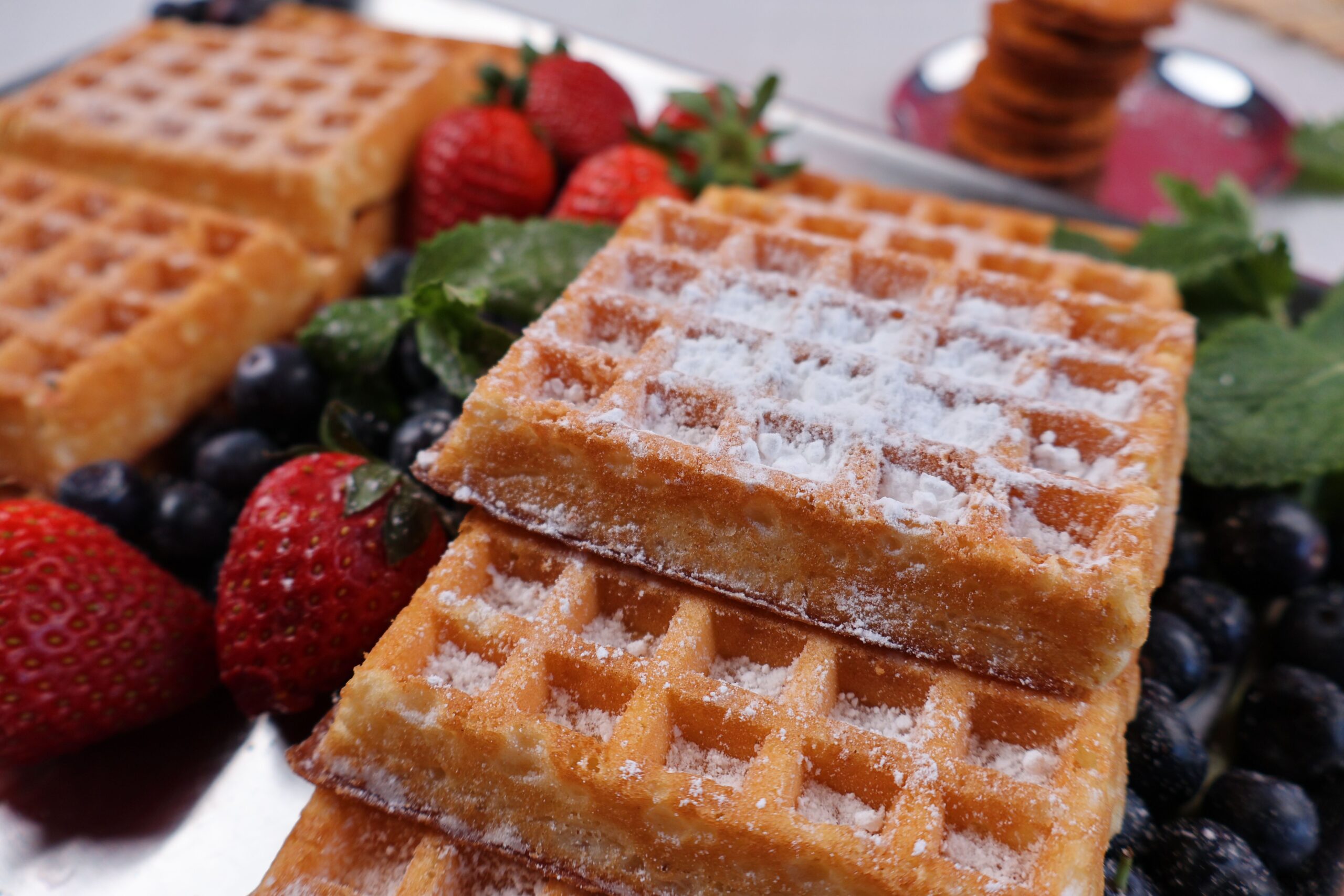
| Post-Iron Resting | Stacked on a flat plate | Resting on a wire rack in a 250°F oven | Eliminates bottom condensation and maintains maximum crunch |
Step-by-Step Execution Guide
1. The Dry Starch Blend
In a large mixing bowl, whisk together the all-purpose flour, cornstarch, baking powder, baking soda, salt, and granulated sugar. Whisk for a minimum of 40 seconds. Sifting dry ingredients ensures that the cornstarch integrates evenly into the flour without forming dense clumping zones.
2. The Wet Base and Meringue Separation
Carefully separate your two room-temperature eggs. Place the whites into a clean, oil-free metal or glass bowl, and drop the yolks into a separate measuring pitcher with the milk, melted butter, and vanilla extract. Whisk the yolk-liquid mixture until completely unified.
Using a hand mixer or balloon whisk, beat the egg whites on medium-high until glossy, stiff peaks form (around 2 to 3 minutes). When you lift the beaters, the peaks should stand straight without drooping. This stable foam will hold air pockets inside the dense waffle iron.
3. The Gentle Two-Phase Fold
Pour the liquid mixture into the dry flour blend. Stir with a wooden spoon or spatula just until combined—lumps are perfectly acceptable. Next, scoop one-third of the whipped egg whites into the bowl and fold vigorously to lighten the batter density. Finally, gently fold in the remaining whites using broad, sweeping strokes until no large white streaks remain. Do not overmix.
4. Iron Temperature & Steam Signals
Preheat your Belgian waffle maker until fully hot. If your iron has adjustable temperature dials, set it to medium-high heat. Lightly brush the grids with neutral cooking oil; non-stick cooking sprays contain propellants that leave a sticky residue over time.
Ladle approximately 1/2 to 3/4 cup of batter onto the center of the hot iron grids (adjust according to your iron size). Close the lid smoothly and flip immediately if using a rotating Belgian iron. Never open the iron based on a timer. Watch the escaping steam: when violent steam clouds subside to a faint trickle, your waffle is cooked and crisped through (typically 4 to 5 minutes).
5. The Crucial Wire Rack Rule
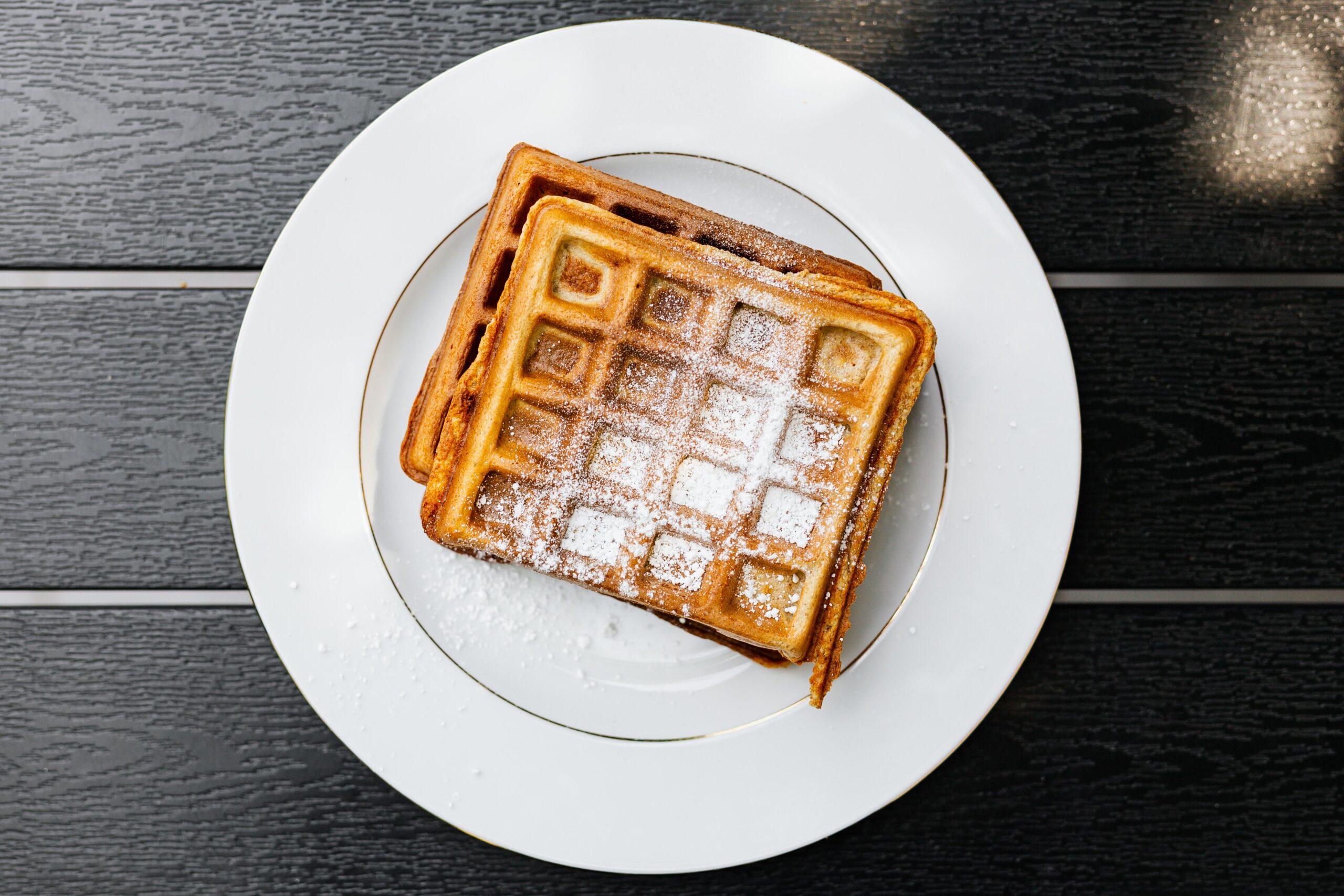
Lifting the waffle out with a silicone-tipped fork is only half the battle. Never lay hot waffles flat onto a plate or cutting board. The steam releasing from the underside will hit the flat plate, turn into liquid water droplets, and ruin the crunch within 30 seconds. Always transfer waffles directly to an elevated wire cooling rack, or hold them in a preheated 250°F (120°C) oven on a rack until serving.
Troubleshooting Common Waffle Pitfalls
1. My waffles turn limp and soft after two minutes
Cause: Stacking cooked waffles, or lack of starch in the recipe. Trapped steam softens the crust.
Fix: Incorporate the cornstarch ratio and rest your finished waffles on an open wire rack inside a warm oven rather than stacking them.
2. The waffle tore in half when opening the iron
Cause: Opening the iron too early, or insufficient fat in the batter/iron.
Fix: Let the steam stop completely before lifting the lid. If steam is still pouring out, the interior proteins have not fully set and will pull apart.
3. The exterior burns before the inside cooks through
Cause: Too much sugar in the batter or excessively high iron temperature.
Fix: Lower the heat setting slightly and limit added sugar to no more than 2 tablespoons per 2 cups of flour.
Frequently Asked Questions (FAQ)
Can I prepare waffle batter the night before?
You can mix the dry ingredients and the liquid yolk mixture ahead and keep them refrigerated separately. However, do not whip or fold the egg whites until just before baking. Whipped egg whites deflate if left standing overnight in the refrigerator.
How do I reheat leftover waffles to restore the crunch?
Never reheat waffles in a microwave; microwaves excite water molecules and make bread gummy. Instead, pop frozen or refrigerated waffles directly into a wide-slot toaster or bake at 350°F (175°C) in an oven or air fryer for 3 to 4 minutes. They will regain their original crispness.
Can I make these in a standard thin waffle iron?
Yes, this batter recipe works exceptionally well in both deep Belgian irons and classic thin grid makers. Just reduce the ladle volume to roughly 1/3 cup per bake.
Keywords & Tags: #BelgianWaffles #CrispyWaffles #BreakfastIdeas #BrunchRecipes #Desserts #RecipeEnthusiast