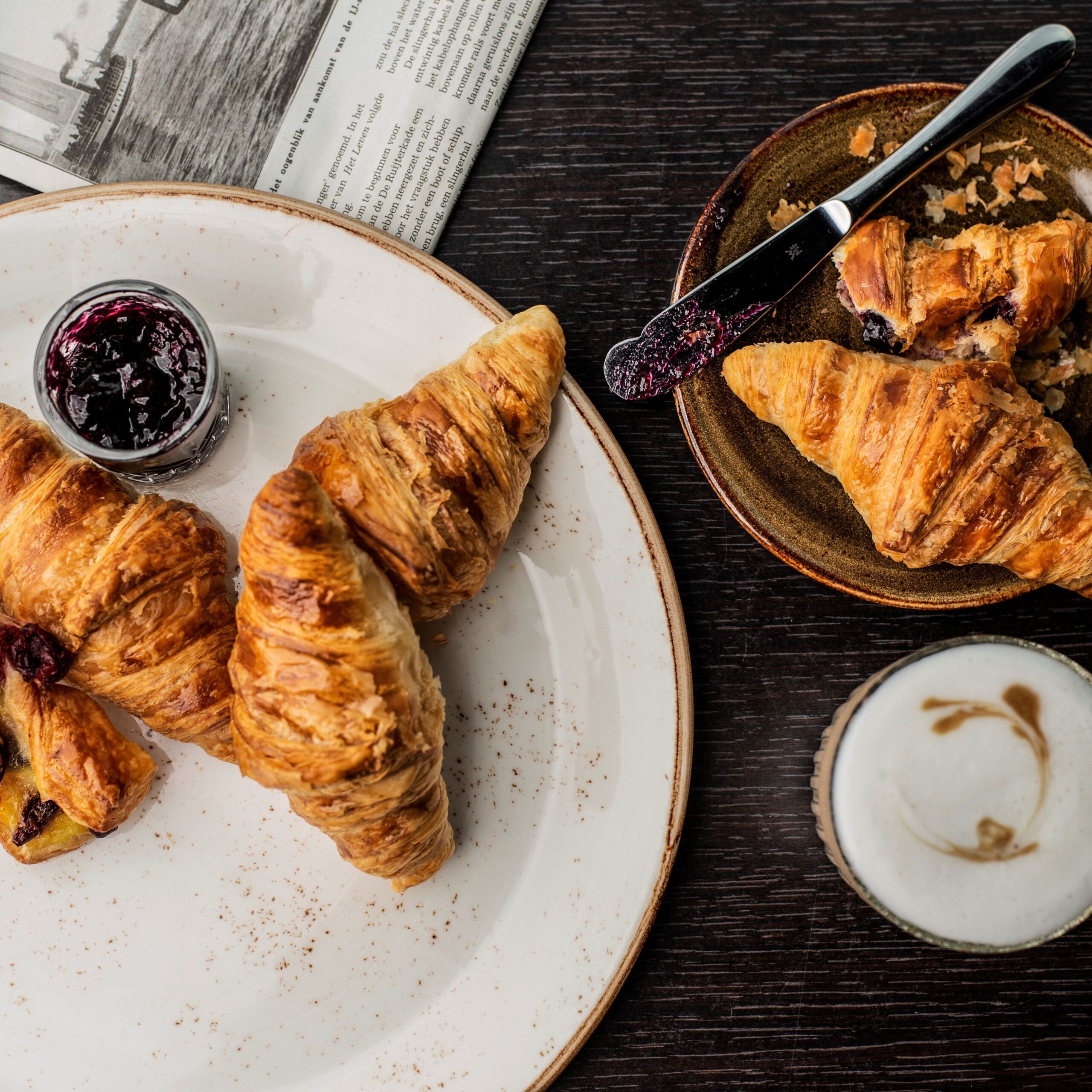
Baking an authentic French croissant is widely regarded by master bakers as the pinnacle of pastry engineering. Far superior to commercial puff pastries leavened with artificial baking fats, an authentic butter croissant relies on precision lamination: creating alternating microscopic sheets of cold cultured butter and yeasted dough (détrempe) that convert trapped moisture into explosive steam pockets inside the oven, resulting in a featherweight crumb, a resonant golden shatter, and an open, geometric honeycomb interior.
The Biophysics of Pastry Lamination
Unlike standard bread doughs where gluten networks are developed into a singular elastic mesh, laminated viennoiserie requires micro-stratification. The entire success of the bake is governed by three strict thermodynamic and mechanical parameters:
- The Thermal Window of Butter Plasticity: Real European butter (82–84% butterfat) possesses a narrow plasticity window between 57°F and 64°F (14°C to 18°C). If the butter block drops below 54°F (12°C), it shatters into jagged shards inside the dough during rolling, tearing the gluten sheets. If it exceeds 68°F (20°C), the butter melts into the flour, turning a laminated pastry into an ordinary heavy brioche.
- Explosive Steam Lift vs. Yeast Expansion: While commercial croissants often rely heavily on chemical leaveners, traditional croissants utilize a dual-lift mechanism. As the cold butter sheets vaporize in a hot oven (400°F / 200°C), the expanding steam pushes the separated dough layers upward like microscopic pistons, while yeast fermentation delivers elasticity and aromatic complexity.
- Gluten Retardation via Chill Intervals: Kneading creates tension within gliadin and glutenin protein chains. Rolling dough under high mechanical stress without adequate resting causes the sheets to snap back and tear. Chilling between folds relaxes the protein matrix, allowing paper-thin extension without butter breakthrough.
Ingredients & Functional Profile
| Ingredient | Precise Quantity | Functional Contribution |
|---|---|---|
| High-Fat European Style Butter (Beurre Sec) | 1 cup + 2 tbsp (250g), 82-84% fat | Forms pliable, non-melting laminating sheets; low water content prevents dough sogginess. |
| French T55 or Unbleached Bread Flour | 3 3/4 cups (500g), 11.5-12% protein | Provides sufficient gluten structure to trap high-pressure steam without becoming tough. |
| Whole Milk (Cold) | 1/2 cup + 2 tbsp (140ml) | Supplies natural lactose for Maillard browning and softens the crumb through milk fats. |
| Filtered Cold Water | 1/2 cup + 2 tbsp (140ml) | Hydrates flour starches and proteins without generating premature enzymatic warmth. |
| Granulated Cane Sugar | 1/4 cup (50g) | Feeds the active yeast and balances yeast acidity with gentle caramel sweetness. |
| Instant Dry Yeast (Gold Label) | 2 teaspoons (7g) | Osmotolerant yeast designed to ferment steadily in sugar- and fat-enriched doughs. |
| Fine Sea Salt | 2 teaspoons (10g) | Strengthens the gluten matrix, regulates yeast activity, and enhances buttery notes. |
| Softened Butter (For Détrempe) | 3 tablespoons (40g) | Lubricates raw gluten strands during the initial mix to allow smooth rolling later. |
| Whole Egg + 1 Splash Milk (Egg Wash) | 1 egg beaten with 1 tbsp milk | Creates a mirror-like, caramelized lacquer across the surface through protein coagulation. |
Step-by-Step Culinary Protocol
Step 1: Mixing the Détrempe (Base Dough)
In a large mixing bowl or stand mixer fitted with the dough hook, combine the flour, granulated sugar, instant yeast, and fine sea salt. Pour in the cold whole milk and chilled water, followed by the 40g of softened butter. Mix on lowest speed for 3 minutes just until a shaggy dough comes together. Do not over-knead; excessive early gluten development makes rolling the dough nearly impossible. Shape into a flat rectangle, wrap tightly in plastic wrap, and refrigerate for a minimum of 8 to 12 hours to relax the gluten and chill thoroughly.
Step 2: Constructing the Beurre de Tourage (Butter Block)
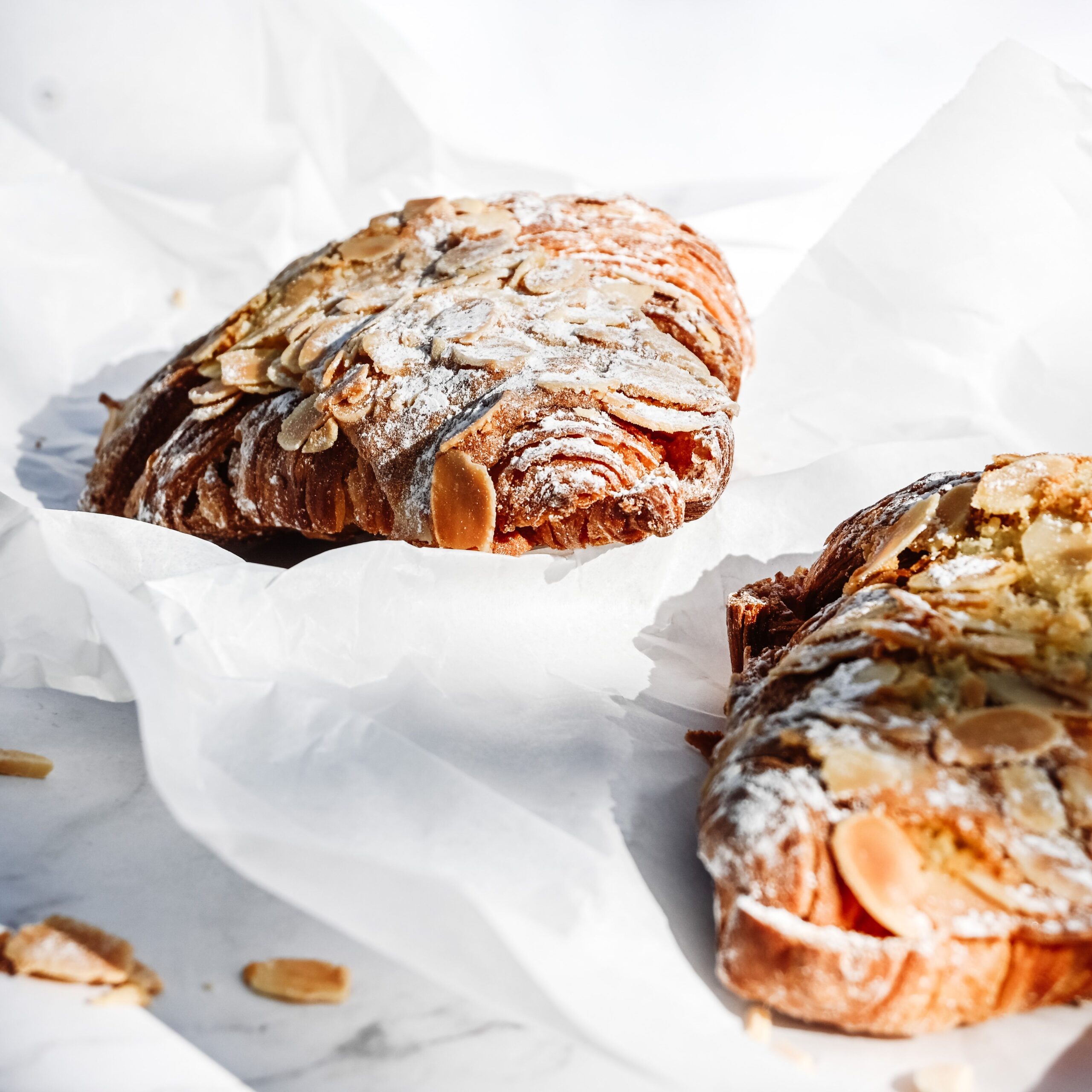
Place the cold European butter between two large sheets of parchment paper. Fold the parchment into an 8×8-inch (20x20cm) square envelope. Using a heavy rolling pin, pound the butter firmly to soften its crystalline structure, then roll it into the corners of the parchment square to form an even, flat slab of uniform thickness. Chill for 20 minutes until it feels firm yet flexible like leather—it must bend without snapping.
Step 3: The Lock-In Phase
Roll the chilled détrempe on a lightly floured surface into a 16×8-inch rectangle, precisely twice the length of the butter block. Place the pliable butter block in the center of the dough. Fold both flap ends of the dough over the butter so they meet cleanly in the middle, pinching the seam tightly to seal the butter completely inside. You now have a unified dough-butter package.
Step 4: Executing the Lamination Folds
Lightly flour your work surface. Gently press the rolling pin along the dough package to distribute the butter evenly, then roll smoothly into a long rectangle approximately 24×8 inches (60x20cm). Perform a standard Letter Fold (Single Turn): fold the top third downward, then fold the bottom third over it, resembling a business letter. Wrap tightly in plastic wrap and chill for 45 minutes. Repeat this rolling and folding process two more times, chilling for 45 minutes between each turn. This creates 55 distinct layers of alternating dough and butter.
Step 5: Sheeting and Precision Shaping
Roll the rested dough on a lightly floured bench into a wide sheet measuring roughly 10×40 inches and 4mm in thickness. Trim the ragged borders with a sharp pizza wheel or chef’s knife to expose the open butter layers. Cut long isosceles triangles with a 3.5-inch (9cm) base and a 10-inch height. Gently stretch the base of each triangle, make a small 1/2-inch vertical notch in the center of the base, and roll the dough forward with light tension, curling into a classic crescent shape with the tip tucked underneath.
Step 6: The Humidity Proofing Stage
Arrange the shaped croissants on parchment-lined heavy baking sheets, spaced 3 inches apart. Brush the exposed surfaces with a light coating of egg wash, taking care not to drip wash along the cut layered edges (as dried egg will glue the layers shut). Proof the croissants in a draft-free environment at 75°F to 78°F (24°C to 26°C) for 2 to 2.5 hours. Never proof above 82°F (28°C), or the butter will liquefy and pool on the sheet. The croissants are ready when they wobble like gelatin, double in size, and display distinct separated layers on their sides.
Step 7: High-Thermal Bake
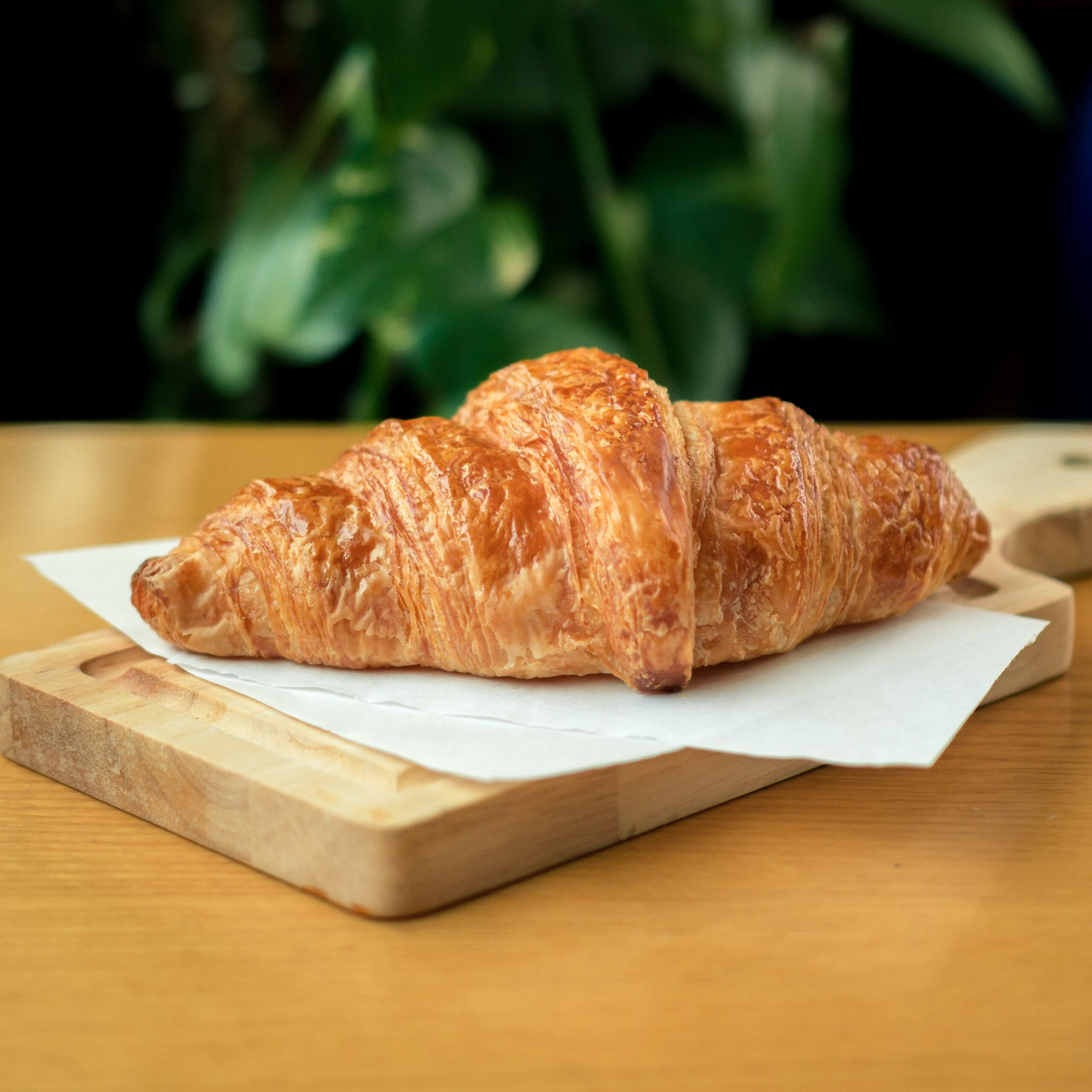
Preheat the oven to 400°F (200°C). Apply a second delicate coat of egg wash over the curved surfaces. Bake for 10 minutes at 400°F, then reduce the heat to 375°F (190°C) and bake for an additional 10 to 12 minutes until deep amber-brown. The sudden initial heat flash converts the water in the butter into high-pressure steam, driving maximum vertical layer separation. Cool on a wire rack for 30 minutes before cutting.
Troubleshooting Common Croissant Failures
| Visual Problem | Root Scientific Cause | Corrective Protocol |
|---|---|---|
| Butter Leaking onto the Baking Pan | Proofing temperature was too warm (above 82°F / 28°C), melting the butter prematurely. | Keep proofing chambers below 78°F (25°C) to ensure butter stays solid until baking. |
| Dense, Bread-Like Crumb (Brioche) | Butter was too warm during rolling and absorbed directly into the dough flour. | Adhere strictly to the 45-minute chill intervals between turns to preserve layer separation. |
| Flakes Shattering During Rolling | The butter block was too cold and brittle, splintering through the flour sheets. | Pound the butter to ensure pliability before locking in; it must bend without cracking. |
| Pale, Collapsing Croissant Walls | Under-baking, leaving inner dough layers saturated with steam rather than set starch. | Bake until deep mahogany amber; do not pull early when pastries look only lightly golden. |
Storage, Freezing, and Re-Crisping Protocols
Laminated pastries are dynamic structures that lose their crisp perimeter rapidly when exposed to humidity:
- First 24 Hours: Keep baked croissants uncovered or inside a breathable paper bag at room temperature. Sealing them in airtight plastic containers traps escaping moisture, softening the crisp exterior crust.
- Freezing Unbaked Dough: Shape the croissants completely, flash-freeze on a sheet pan until rock solid, and store in airtight freezer bags for up to 2 months. To bake, transfer frozen croissants to a baking tray and allow them to thaw and proof at room temperature for 5 to 6 hours before baking.
- Restoring Bakery Crunch: Never microwave a stale croissant, as the butter will melt and render the dough gummy. Re-crisp in an oven or toaster oven at 350°F (175°C) for 4 to 5 minutes to restore the crispy flakiness.
Frequently Asked Questions (FAQ)
Can I use regular table butter instead of European-style butter?
Standard grocery butter contains 18–20% water, whereas European-style butter has 16% or less. That excess water creates steam too early and turns the dough sticky, risking torn layers. Using butter with at least 82% butterfat is essential for professional lamination.
Why shouldn’t egg wash touch the cut edges of the croissant?
The cut sides expose the paper-thin alternating sheets of dough and butter. If raw egg wash drips down those seams, it cooks and glues the layers together, preventing them from puffing open during the bake.
How do I know if my croissants are proofed properly?
Gently shake the baking sheet; properly proofed croissants will wobble gently like jelly, feel airy and light when lifted, and reveal visible individual curved layers along their sides.
Nutritional Analysis (Per Croissant)
- Servings: 12 large bakery croissants
- Calories: 340 kcal
- Total Carbohydrates: 35 g
- Dietary Fiber: 1.6 g
- Protein: 5.8 g
- Total Fat: 19.5 g
- Saturated Fat: 12.2 g
- Cholesterol: 55 mg
- Sodium: 290 mg